
Reading a contract for the first time can be confusing. You will come across long sentences, complex legal terms, and clauses that are difficult to understand. Knowing how to read a contract is different from reading Contract I and II in your law school.
Contract drafting is a key legal skill that opens a door to well paid job and internship opportunities. No matter whether you are a law student, a fresh graduate, an advocate, or a working professional, contract drafting skill helps you understand what you are agreeing to, what you can expect from the other party, and what could go wrong if something does not go as planned.
But you do not have to understand everything at once. First you need to follow the basics of how to read a contract and you should know what to look for and how to read each part carefully.
Here is a simple, step-by-step guide on how to read a contract for the first time.
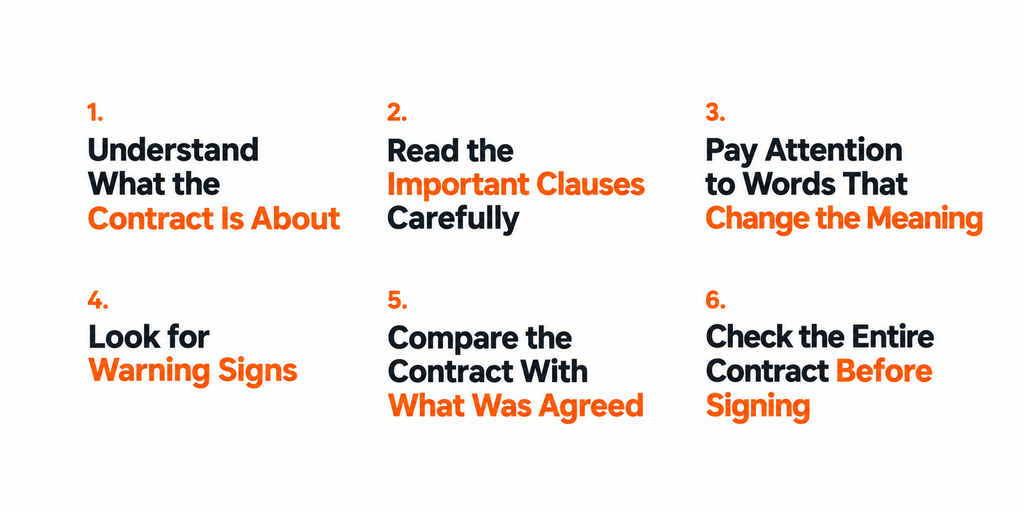
Image 1: Six Essential Contract-Reading Tips
1. Understand What the Contract Is About
Before you start reading every clause, understand why the contract has been prepared. Ask yourself three simple questions:
- Who are the parties signing the contract?
- What are they agreeing to do?
- What does each party get in return?
For example, a company hires a freelance content writer to write ten articles for Rs. 20,000. The contract should explain what the writer must deliver, when the work must be completed, and when the company must pay.
If you really want to learn how to read a contract then start by reading the title, the names of the parties, the opening paragraphs, and any section that explains the purpose of the agreement. Do not worry if you come across terms you haven’t heard before. Your first goal is to understand the basic arrangement between the parties.
Practical tip: After reading the opening section, try explaining the contract in two or three sentences. If you cannot explain what the parties have agreed to, read the opening section again.
2. Read the Important Clauses Carefully
Once you understand the purpose of the contract, move on to the clauses that explain what each party must do and what happens if something goes wrong.
Here are some important clauses to look for when reviewing a contract. For a closer look at the clauses commonly found in commercial agreements, read 5 key clauses in a commercial contract.
Parties to the contract: Check whether the names and details of everyone involved are correct. Make sure the person signing has the authority to sign on behalf of a company, where applicable.
Scope of work: This section explains what each party must do. Check whether the work, services, deadlines, and expected results are clearly mentioned.
Payment terms: Look at the amount to be paid, the payment deadline, any additional charges, and the conditions that must be met before payment is due.
Confidentiality: This clause explains what information must be kept private and how it can be used or shared.
Intellectual property: Check who will own the work created under the contract. For example, if a designer creates a logo for a company, the contract should explain who owns the logo and whether the designer can use it in a portfolio.
Indemnity and liability: These clauses deal with responsibility for certain losses or claims. Check whether one party could have to pay for losses caused by particular events and whether there is a limit on the amount they may have to pay.
Pay particular attention to whether the contract caps the amount a party may have to pay. This guide explains how limitation of liability clauses work and what to consider when reviewing them.
Termination: This section explains how the contract can end. Check whether either party can end it, how much notice is required, and what happens to pending work and payments.
Dispute resolution: Find out what happens if the parties disagree. Check whether they must first try to resolve the issue between themselves, go to arbitration, or approach the courts.
Not every contract will contain all these clauses. The clauses you need to focus on will depend on the type of agreement you are reading.
For example, a shareholders’ agreement deals with matters such as investor rights, share transfers, governance, exit rights, and disputes. If you are reviewing one, this guide on how to draft a shareholders’ agreement will help you understand the issues such an agreement may need to address.
3. Pay Attention to Words That Change the Meaning
Sometimes, a small word can change what a clause means. For example, consider these two sentences:
- The company may terminate the agreement.
- The company shall terminate the agreement.
The first generally gives the company the option to end the agreement. The second generally expresses an obligation to do so. The exact meaning will depend on the full clause and the contract.
Also pay attention to words such as “unless”, “except”, “subject to” and “provided that”. These words often introduce conditions or exceptions.
For example, a contract may say that a party cannot share confidential information, except where disclosure is required by law. Reading only the first part would give you an incomplete understanding of the obligation.
Check whether a clause refers to another section of the contract. If it does, read that section too.
Practical tip: Do not read every clause as a separate rule. Sometimes, you need to read two or three clauses together to understand what they actually mean.
If a contract uses vague wording that leaves the parties’ obligations uncertain, you can read more about the interpretation of uncertain terms in a contract and the approach taken under Section 29 of the Indian Contract Act, 1872.
4. Look for Warning Signs
A contract may look professional but still contain terms that need attention. As you read, look for the following warning signs.
- Missing details: Are dates, payment amounts, names, or other important details left blank?
- Unclear responsibilities: Does the contract explain exactly what each party must do, or does it use vague language?
- Unfair termination terms: Can one party end the contract immediately while the other must give several months’ notice?
- High financial risk: Could one party be required to pay a large amount if something goes wrong?
- Automatic renewal: Will the contract renew on its own if neither party gives notice?
- Restrictions after the contract ends: Does the agreement restrict future work, business activities, or the use of information?
- Conflicting terms: Does one clause say something different from another clause?
If you find a problem, do not immediately assume that the clause is illegal or unenforceable. Mark it, understand its possible effect, and check the relevant law where necessary.
For contracts governed by Indian law, the Indian Contract Act, 1872, is an important starting point. Section 10 deals with the requirements for agreements to become contracts, while Section 29 deals with agreements whose meaning is uncertain or cannot be made certain.
The legal effect of a clause will depend on the wording, the facts, and the applicable law.
5. Compare the Contract With What Was Agreed
One of the easiest ways to find a problem is to compare the written contract with what the parties actually discussed and agreed upon.
Suppose a client agrees to pay a freelancer Rs. 20,000 for ten articles. However, the written contract requires the freelancer to write twenty articles for the same amount.
The payment amount may be correct, but the work required is not. To avoid such mistakes, compare the contract with relevant emails, proposals, quotations, meeting notes, and earlier drafts. Check the following:
- Is the agreed payment correct?
- Are the deadlines the same as those discussed?
- Has the work been described correctly?
- Are both parties’ responsibilities clear?
- Have any additional conditions been included?
If the written terms do not match what was discussed, or a clause needs to be revised, it may help to understand the basics of negotiating commercial contracts effectively before you raise your concerns.
If something is unclear, write down your questions and ask for clarification before signing or approving the contract. If you are reviewing a contract as part of your job or internship, maintain a simple list of the clause, the issue, and the change or clarification required.
This makes your review easier to follow and helps others understand why you have raised a concern.
6. Check the Entire Contract Before Signing
Once you have reviewed the main clauses, read through the document one more time. Check whether:
- All names, dates, amounts, and other details are correct.
- Every clause referred to in the contract is present.
- All schedules and attachments have been included.
- There are no blank spaces or unresolved changes.
- The final version reflects what both parties agreed to.
- The signing and other legal formalities have been completed as required.
Depending on the type of agreement, Indian law may require stamping, registration, witnesses, or other formalities. The requirements are not the same for every contract, so check what applies to the particular document.
Keep a copy of the signed agreement and its attachments for future reference. Most importantly, do not sign a contract simply because you have read it from beginning to end. If an important clause is still unclear, ask questions before proceeding.
Conclusion
Knowing how to read a contract for the first time does not require you to know every legal term. It requires you to understand what the parties have agreed to, what each party must do, and what could happen if something goes wrong.
Start by understanding the purpose of the agreement. Then review the important clauses, look for warning signs, compare the written terms with what was agreed, and check the document carefully before signing.
If you are a law student or a fresh graduate, practise with simple agreements such as NDAs, employment agreements, and service contracts. With each review, you will become better at spotting unclear terms and asking the right questions.
If you want to move beyond reading contracts and learn how to review, draft, and negotiate them in practice, explore Lawctopus Law School’s 2-month Contract Drafting and Negotiation course. It includes practical exercises built to help you apply what you learn to real contract-related tasks.
Remember, a good contract review is not about understanding every word immediately. It is about knowing what to look for, what to question, and when to seek help.
About the Author
Shatakshi Singh is a Legal Content Manager at Lawctopus. She has completed her LLM in Constitutional and Administrative Law from the ICFAI University, Dehradun. She is also a POCSO TTT Certified trainer.