
What is a shareholders’ agreement (SHA)?
A shareholders’ agreement (SHA) is a private contract between a company’s shareholders, and usually the company itself that sets out their rights, obligations and protections. It sits alongside the Memorandum and Articles of Association (MoA) and covers what those documents normally do not: investor protections, founder commitments, share transfers, exits and dispute resolution.
A shareholder is any person or entity that holds shares in a company and therefore owns part of it. The relationship is usually smooth at the start. Problems tend to surface when the company grows, raises fresh capital, or runs into operational trouble.
That is when an SHA becomes essential. A good SHA anticipates future events (funding rounds, deadlocks, share transfers, founder exits and governance disputes) and balances the interests of investors and founders before those events occur.
Is a shareholders’ agreement mandatory in India?
No. Nothing in the Companies Act, 2013 requires a company to sign one. An SHA is a contract governed by the Indian Contract Act, 1872. It becomes practically unavoidable in three situations: when an outside investor comes in, when a joint venture is formed, and when co-founders want their arrangement recorded.
What investors and founders want from the SHA
Every clause in an SHA is a negotiated trade-off between two sets of commercial interests. Knowing what each side wants makes the drafting choices in the rest of this guide easier to follow.
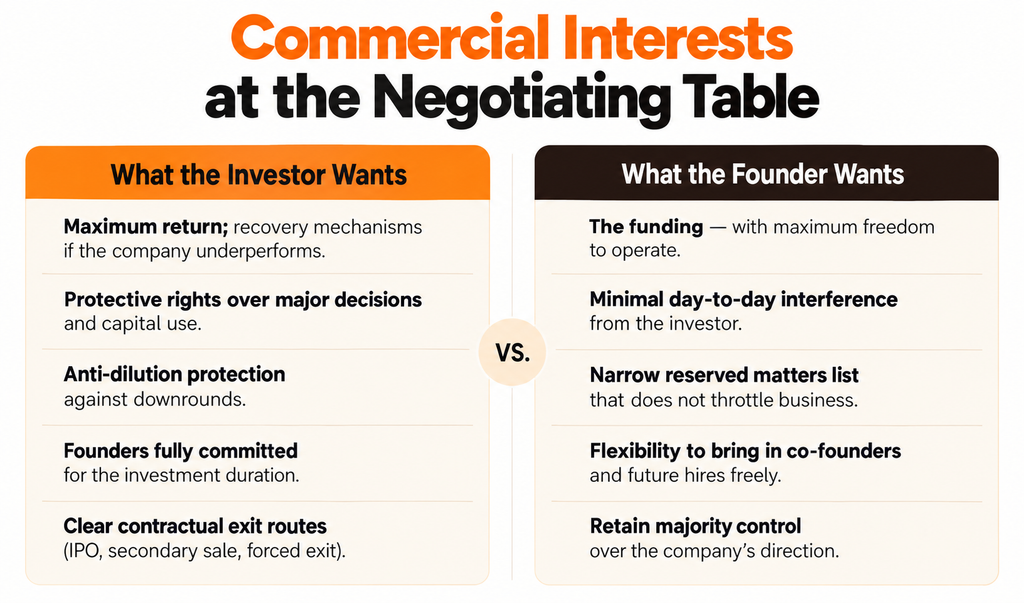
Image 1: Every SHA clause is a trade-off between these two lists.
Is a shareholders’ agreement legally binding in India?
Yes, between the parties who sign it. The difficult question is whether it binds the company. The short rule from Indian case law is this: an SHA right that is not reflected in the Articles of Association may be enforceable between shareholders, but it is unlikely to be enforced against the company.
| Case | What the court held |
| V.B. Rangaraj v. V.B. Gopalakrishnan (Supreme Court, 1992) | A restriction on share transfers that is not in the Articles does not bind the company or its shareholders. |
| Messer Holdings v. Shyam Madanmohan Ruia (Bombay High Court, 2010) | Shareholders can privately agree to pre-emption arrangements among themselves, even if the Articles are silent. |
| World Phone India v. WPI Group Inc. (Delhi High Court, 2013) | An affirmative vote right in a joint venture agreement could not be enforced against the company because it was not in the Articles. |
| Bajaj Auto v. Western Maharashtra Development Corporation (Bombay High Court, 2015) | A right of first refusal between shareholders is a valid private contract and does not offend free transferability of shares. |
The practical lesson is simple: Make the company a party to the SHA and mirror every key right in the Articles. The Articles are altered by special resolution under Section 14 of the Companies Act, 2013.
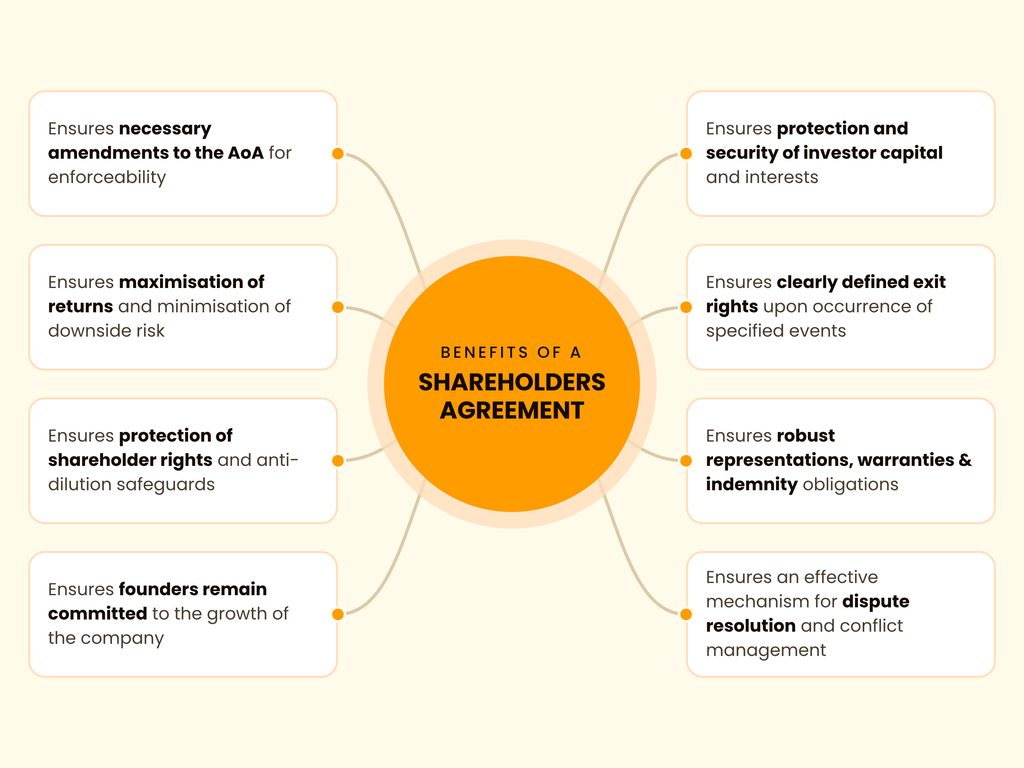
Image 2: Benefits of SHA
Key clauses in a shareholders’ agreement
1. Investment Terms and Return Protection
a. Securities Instrument
The drafting of an SHA starts with clauses that safeguard the economic gain of the investor by providing maximum benefits and reducing risks. One of the main factors to consider is the type of security one subscribes to because the rights of the investor and the risk they incur vary according to whether it is equity, preference shares, or a hybrid security.
Equity offers the best upside and the worst downside risk, while preference shares and debentures ensure repayment priority and greater income certainty. Compulsorily Convertible Preference Shares (CCPS) and Debentures (CCDs) are popular hybrid instruments regarding Indian startup transactions, which offer downside protection at an early stage.
b. Liquidation Preference
A key commercial protection is the liquidation preference clause, which guarantees that investors recover their investment ahead of other shareholders in case of liquidation or other exit conditions. In SHA, liquidation goes beyond formal winding up and can incorporate mergers, changes in control, or large issues of shares. This clause safeguards investors against capital depreciation and is recovery-driven.
2. Protective Rights & Anti-Diluation Clause
- Veto rights: In SHA, veto rights are given to the investors, which means without the approval of the investor, the company will not be able to issue fresh shares to any individual. This secures their interest and makes them have a say in the capital structure.
- Pre-emption rights: This enables the existing shareholders to proportionately subscribe to the subsequent share issues to ensure that their shareholding percentage is not affected.
- Anti-Dilution Rights: It safeguards the shareholders’ percentage of an investor in case of an increase in funds at a lower value by the company than what was invested by the investor, called a downround. This makes sure that they get more shares to address the decline in valuation.
3. Keeping Founders Committed: Lock-ins, Non-Competes, and Reverse Vesting
a. Founder Lock-ins
A founder lock-in clause limits the sale, transfer, pledging, or encumbrance of founders’ shares within a given time, typically until the investor leaves. This provides management stability and removes untimely exit by founders.
b. Execution of employment agreements
Founders are usually required by the investor to sign employment contracts before investing to guarantee full-time commitment to the company’s activities.
c. Non-Compete Clauses
The non-compete clause restricts the founders from getting involved in businesses of a conflicting nature during the investment period and usually a certain time later. This helps to avert business opportunity diversion because startups are highly valued based on the expertise of the founders. The non-compete clause can also stop a founder from soliciting the customers.
d. Reverse Vesting
A few SHAs provide a reverse vesting schedule to the already existing shares of the founders and do not allow them to exit the company holding a large share of the equity. Good-leaver provisions can allow equity shares to be fairly held under certain conditions.
A vesting schedule can also be helpful to the startup, since a founder or key person leaving the company may not only lose the necessary expertise but also decrease the amount of equity needed to bring a suitable replacement.
e. Tag-along
Tag-along clauses protect minority shareholders when majority shareholders seek to exit by selling all or a substantial portion of their shares. These rights ensure that investors are able to exit on similar terms before founders transfer their ownership to a third party.
4. Protection of Investment
a. Board representation
In any SHA, investors are entitled to nominate directors or observers to the board. The investor’s directors’ objective is to keep a watch and stay informed about the activities of the company.
b. Affirmative Voting
An SHA contains a list of ‘reserved matters’ in an annexure, providing investors with consent rights over reserved matters. These are usually on issues that are outside the ordinary course of business. For example:
- issuing further shares
- declaration of dividends
- initiation of winding-up proceedings
- transfer of key assets
- change in directors of the company
- initiation of legal proceedings
c. Information covenants
Investors also typically insist upon information covenants, requiring the company to periodically provide financial statements, budgets, business plans, and operational updates on a monthly or quarterly basis.
d. Right to inspect
It allows investor representatives to carry out inspection of the company’s books of accounts and statutory records upon prior notice.
e. Right to first refusal (ROFR)
It safeguards the interest of existing shareholders by keeping them first to purchase shares to be sold by another shareholder before they are sold to third parties.
5. Exit Rights on Specified Events
a. Breach of terms/event of default
Shareholders can have an option to buy the shares of the defaulting shareholder in case of material breach or default, which is irrevocable. These rights are usually exercisable in the event that the breach has not been cured within a stipulated time.
b. Material adverse change/effect
Material adverse effect or material adverse change (MAC) clause enables an investor to refuse to invest or withdraw from the company when the situation poses a fundamental and adverse impact on the business.
Where such a change has happened following the investment made, the investors can refer to their exit rights under the Shareholders Agreement. As MAC clauses are frequently written in general terms, founders must agree on objective limits of liabilities, claims, or losses that can cause such rights.
6. Representations, warranties, indemnities
The investee and its promoters are required to make representations and warranties as regards the legal and commercial status of the company, such as that it is a duly incorporated company, capable of entering into the transaction, and free of any undisclosed liability.
These warranties are normally repeated on the signing and closing dates under the SHA so that the factual position is not disturbed. The company or promoters can be obligated to indemnify the investor against losses incurred in the event of breach.
These provisions are important risk allocation mechanisms and could also activate exit rights on their own.
7. Dispute Resolution
Every SHA needs a dispute resolution clause that limits disruption to the business. Most provide for a tiered process: negotiation first, then mediation, and arbitration if the dispute is still not settled.
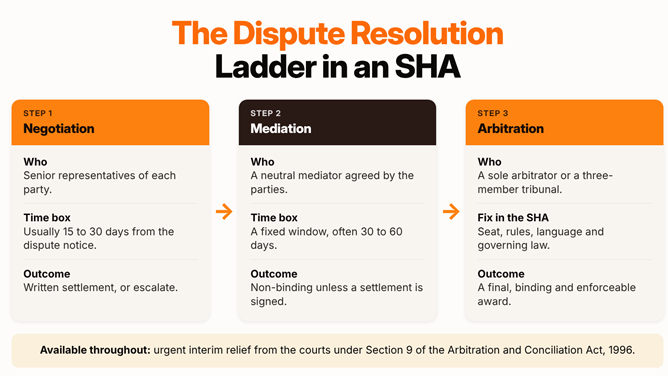
Image 3: A tiered dispute resolution clause: negotiate, mediate, then arbitrate
When drafting the arbitration clause, get these points right:
- Seat, not just venue: The seat decides which courts supervise the arbitration. The Supreme Court explained the difference in BGS SGS SOMA JV v. NHPC (2019). Founders should ask for a seat in India, ideally in a convenient city, to limit cost, travel and disruption.
- Rules and tribunal: Choose institutional rules (for example MCIA, DIAC or SIAC) or ad hoc arbitration, and state the number of arbitrators and the language.
- Interim relief: Preserve the right to approach courts for urgent interim relief under Section 9 of the Arbitration and Conciliation Act, 1996.
- Stamp duty: A seven-judge bench of the Supreme Court held in December 2023 that an arbitration clause in an unstamped agreement is not void and that the defect is curable. An unstamped SHA is still inadmissible in evidence until it is stamped, so stamp it at signing.
- What cannot be arbitrated: Petitions for oppression and mismanagement under Sections 241 and 242 of the Companies Act, 2013 are heard by the National Company Law Tribunal and generally cannot be sent to arbitration.
8. Amendment of Article of Association
As per Indian company law, it is important to amend the Articles of Association (AOA) to make sure that the SHA becomes binding to the company. Amendment of the AOA is usually a pre-investment condition. Board and shareholder resolutions required are made at closing and filings to the Ministry of Corporate Affairs are made.
Common mistakes when drafting a shareholders’ agreement
- Not amending the Articles: Rights that exist only in the SHA may not bind the company.
- Leaving the company out as a party: The company cannot be held to obligations it never signed.
- Using a foreign template: Clauses built for Delaware or English law often clash with the Companies Act, 2013, Section 27 of the Contract Act and FEMA.
- Vague definitions: “Fully diluted basis”, “affiliate”, “cause” and “fair market value” decide most disputes. Define them precisely.
- An overbroad reserved matters list: It slows daily business and can amount to investor control.
- Naming a venue but not a seat of arbitration: This invites a jurisdiction fight before the real dispute starts.
- Promising a foreign investor an assured return: The clause risks being unenforceable under FEMA.
- Forgetting the deed of adherence: New shareholders who do not sign it are not bound by the SHA.
- Skipping stamp duty: An unstamped agreement cannot be used as evidence until duty and penalty are paid.
Shareholders’ agreement format: the standard structure
There is no statutory format for an SHA in India. Most agreements follow the order below, and a reader who knows this order can find any clause quickly.
- Title, date and parties
- Recitals (background to the investment)
- Definitions and interpretation
- Effective date and conditions
- Share capital and shareholding pattern
- Board of directors and shareholder meetings
- Reserved matters (affirmative vote items)
- Information and inspection rights
- Further issue of shares: pre-emptive rights and anti-dilution
- Transfer of shares: lock-in, ROFR or ROFO, tag-along, drag-along
- Exit rights and liquidation preference
- Founder covenants: vesting, non-compete, non-solicit, confidentiality
- Representations, warranties and indemnities
- Events of default and consequences
- Term and termination
- Governing law and dispute resolution
- Miscellaneous: notices, assignment, amendment, conflict with the Articles
- Schedules: cap table, reserved matters list, deed of adherence, disclosure letter
Conclusion
Drafting a shareholders’ agreement is the exercise of anticipating commercial reality and converting it into enforceable legal protection. Every clause, whether liquidation preference, anti-dilution, lock-in, governance rights, exit mechanism or dispute resolution, serves a direct commercial objective.
A well-drafted SHA does more than record rights. It allocates risk deliberately, keeps management stable, protects the value of the investment and reduces future conflict. Draft it in the right sequence, test the economics with numbers, and mirror it in the Articles, and it will remain one of the most important documents in any company or investment transaction.
Want to get better at Company Law? Start with the work corporate lawyers actually do.
A Shareholders’ Agreement is not just a list of clauses. You need to know what to put in it, why it matters, and how each clause affects the founders and investors.
That’s the kind of practical Company Law you can learn through Lawctopus Law School’s Practical Aspects of Company Law course.
Learn how Shareholders’ Agreements work, understand share capital and securities, and get familiar with MOA & AOA, ESOPs, NCLT procedures and more to handle corporate law matters confidently.
About the Author
Shatakshi Singh is a Legal Content Manager at Lawctopus. She has completed her LLM in Constitutional and Administrative Law from the ICFAI University, Dehradun. She is also a POCSO TTT Certified trainer.