
Let’s say that there is a fictional start-up company called Kavach Fintech Pvt. Ltd. founded and owned by Aarav Sen as Managing Director. After 3 funding rounds the percentage of Aarav Sen’s holding is reduced to 22%. Three institutional investors, Meridian Capital, Solstice Partners and Northbridge Ventures, hold 51% of the company. After a compliance violation led to a regulatory notice against Kavach Fintech Pvt. Ltd., the three investors lost confidence in Sen and decided that it was time for him to go.
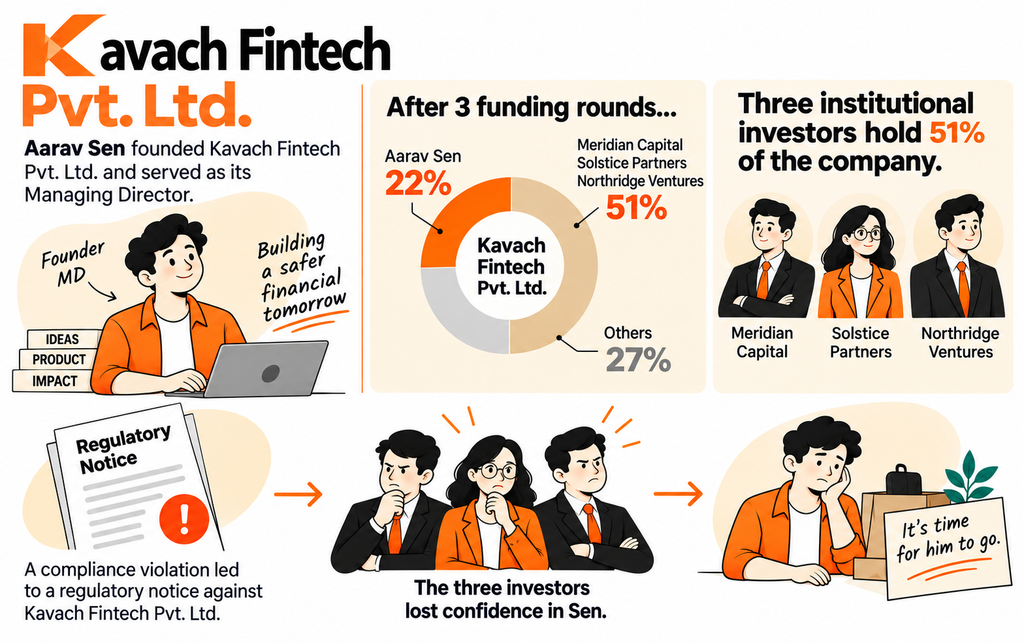
Image 1: Majority voting power and the removal of Aarav Sen as Managing Director under Section 169 of the Companies Act, 2013. Source: Author-generated using ChatGPT.
Most founders and the individual in charge of the company won’t even consider the issue until it’s too late because they don’t realize that a shareholder doesn’t need your permission, your agreement or even a majority of the entire company to put your removal on the table. What they are told is to “follow the process”.
What a majority stake actually buys you at a company?
Companies Act 2013 “(the “Act”)” which allows for the removal of a director before the end of his term of office by an ordinary resolution which is to be passed on the basis of a simple majority of the votes of the shareholders present and by voting at the general meeting under Section 169 of the Act1. It does not require board approval, unanimous consent, or any of the restrictions imposed by earlier court orders.
Returning to the hypothetical situation of Kavach Fintech Pvt. Ltd., Meridian, Solstice and Northbridge, which combined hold 51% of the company, would be required to give at least fourteen clear days’ notice of the meeting proposed to consider any resolution requiring special notice under Section 115 of the Act2. Aarav Sen must be given a chance to present his side at the meeting, and his written representation must be shared with the shareholders beforehand.3 He does, but still at the Extraordinary General Meeting (“EGM”), the ordinary resolution to remove him as director goes through, because 51% of the room votes for it.
Kavach’s Articles of Association (“AoA”) contains a specific provision stipulating that the removal of any director nominated by Aarav Sen can be made only with “founder consent”. That clause protects the directors, Aarav Sen has nominated and it does not, and legally cannot, protect Aarav Sen’s own board seat from a shareholder vote under Section 169.4 The AoA can provide for procedural obstacles elsewhere in a company’s governance, but cannot override a right that the legislature of India has granted the shareholders directly.
Can the person being removed fight back?
The one real avenue of relief available to Sen in this context is under the oppression and mismanagement remedy in Sections 241-242 of the Act. Any party may resort to the National Company Law Tribunal (“NCLT”). Under such provisions, a removal may be challenged if the removal itself, or the circumstances surrounding it, is oppressive to a group of members or prejudicial to the interests of the company.5
It is the essential counterweight to raw voting power, ensuring that even a resolution that satisfies every procedural requirement, including the required majority, proper notice, and valid quorum, can still be challenged when the manner in which that power was exercised is fundamentally unfair or improper. However, there is a catch and that is the very question India’s Supreme Court has already ruled on.
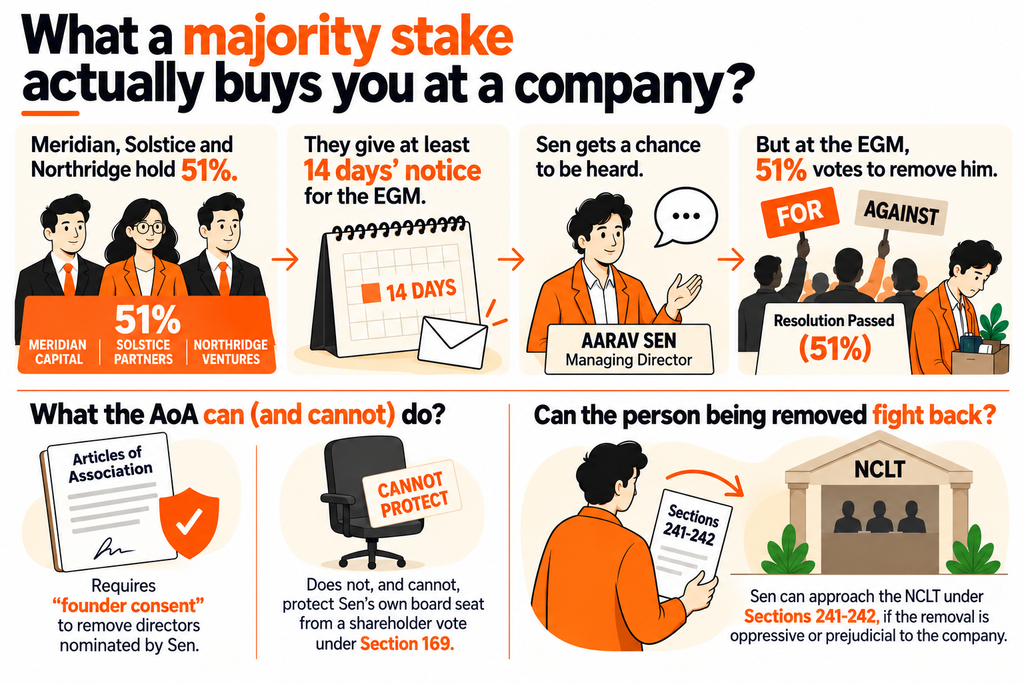
Image 2: Founder protections and the legal remedies available against an unfair or oppressive exercise of majority power. Source: Author-generated using ChatGPT.
Tata Consultancy Services Ltd. v. Cyrus Investments Pvt. Ltd. the case that answered the harder question in the real world
The facts fit the Kavach hypothetical scenario fairly well, on a more massive scale. Tata Sons (“Tata Sons Pvt. Ltd.”) the Tata Group’s principal promoter and holding company, on 24 October 2016, made a board level decision to dismiss Cyrus Mistry as Executive Chairman, before the shareholders’ vote.6 At that time, Mistry continued as Director. That was the second, separate step which took place on 6 February 2017 at an EGM convened for the purpose, Tata Sons’ shareholders passed an ordinary resolution removing Mistry as a director under Section 169.7 The result of the vote was never in doubt as Tata Trusts (“Sir Ratan Tata Trust and Sir Dorabji Tata Trust”) the charitable trusts holding a controlling stake in Tata Sons which is approximately 66% of Tata Sons.
The Mistry family-backed two investment companies, one Cyrus Investments Pvt. Ltd. and another Sterling Investment Corporation Pvt. Ltd., which collectively held approximately 18.4% stake in Tata Sons, who challenged Mistry’s removal under Sections 241-242 of NCLT, Mumbai arguing for “oppression and mismanagement”.8 Their ability to even launch the claim was challenged from the start as their direct equity stake was less than the statutory limit when preference shares were deducted. In 2018, NCLT went in favour of Tata Sons. In December 2019, the National Company Law Appellate Tribunal (“NCLAT”) set aside the said order, ruled that the acts of Tata Sons were indeed oppressive and directed Mistry’s reinstatement.9
Then CJI S.A. Bobde and Justices A.S. Bopanna and V. Ramasubramanian of the Supreme Court quashed the NCLAT order in entirety in a bench of three judges in the appeal filed by Tata Sons, on 26 March 2021.10 The main finding of the Supreme Court was that the dismissal of a chairman or director of a company alone is not sufficient to constitute oppression under Section 241, unless it was clearly prejudicial to the interests of the minority shareholders or the company. If a board loses the confidence in an individual, it translates to a lawful shareholder vote; and to that extent, NCLAT cannot second guess on sympathy basis alone and oppression has to be demonstrated on the facts and not just because of the fact of removal.
That’s the theory that underlies the Kavach hypothetical scenario as well. If Section 169’s procedure had been followed properly, Sen’s oppression claim would have to demonstrate that something happened beyond “I was taken off and I think it was unfair” it would have to show that the procedure was being abused, or that the take-down was part of a pattern of abuse to the company or its minority shareholders that Sen was a part of.
What this actually means if you’re building a company
The lesson here isn’t “avoid investors.” Most companies need investors to grow. The real lesson is to negotiate and protect your rights before problems arise, not when it’s already too late.
Some of the protections founders can negotiate include:
- Superior voting rights or founder shares: Where legally allowed, these can give founders more voting power than their actual percentage of ownership, helping them retain control. Indian company law permits this through shares with differential voting rights under Section 43(a)(ii) of the Act.11
- Protection in the AoA : The AoA can include provisions requiring a higher level of shareholder approval, or even founder consent, for major decisions such as changing the board.
- A well-drafted Shareholders’ Agreement (“SHA”): An SHA can set clear rules about when a founder can be removed, provide waiting or “cooling-off” periods, and include dispute-resolution procedures.
- Board composition rights: Founders can negotiate the right to appoint certain directors or retain specific board seats. They can also negotiate affirmative voting rights over important decisions. In a crisis, these rights can sometimes matter more than simply looking at who owns what percentage of the company. Director appointments of this kind are given effect through Section 152 of the Act12, regarding appointment of directors and Section 161 of the Act, which covers additional and nominee directors.13
All these safeguards cannot prevent a founder from being removed. What they can do is provide the founder with more time, protection and negotiation opportunity than to be surprised.
Business law has a distinct perspective on founders, which differs from that of startup funding stories. Founders are not necessarily those that have unlimited control. If a founder is also a director, then his position is not immune from the rights of the shareholders or the procedure for removing directors. But Tata-Mistry is just the most forthright reminder that, after all the voting rounds, the results have consequences, regardless of the standing or reputation and cannot be erased before a bench. The board seat of Kavach was always not for Sen to retain, it was always at the discretion of shareholders to award and withdraw.
References
- Companies Act, 2013, No. 18 of 2013, Section 169(1), India Code, https://www.indiacode.nic.in/bitstream/123456789/2114/3/a2013-18.pdf. ↩︎
- Companies Act, 2013, No. 18 of 2013, Section 115, India Code (special notice requirements), https://ca2013.com/resolutions-requiring-special-notice/. ↩︎
- Companies Act, 2013, No. 18 of 2013, Section 169(2)-(4), India Code, https://ca2013.com/169-removal-of-directors/. ↩︎
- Companies Act, 2013, No. 18 of 2013, Section 169(1), India Code; see also id. Section 5 (on articles of association). ↩︎
- Companies Act, 2013, No. 18 of 2013, sub-section 241-242, India Code. ↩︎
- Cyrus Mistry Voted Out As Director By Tata Sons’ Shareholders, Udayavani (Feb. 6, 2017), https://english.udayavani.com/article/cyrus-mistry-voted-out-by-tata-sons-shareholders-as-director/194341. ↩︎
- Tata Sons’ Former Chairman Mistry Voted Off the Board, Reuters, via Daily FT (Feb. 8, 2017), https://www.ft.lk/HR/tata-sons-former-chairman-mistry-voted-off-the-board/47-596513. ↩︎
- Tata Consultancy Services Ltd. v. Cyrus Investments (P) Ltd., (2021) 9 SCC 449. ↩︎
- Corporate Legal Battle: Tata vs Mistry – A Comprehensive Analysis of Corporate Governance and Minority Shareholder Rights, Bhatt & Joshi Assocs., https://bhattandjoshiassociates.com/corporate-legal-battle-tata-vs-mistry-part-2/. ↩︎
- Tata Consultancy Services Ltd. v. Cyrus Investments (P) Ltd., (2021) 9 SCC 449 (Civil Appeal Nos. 440-441 of 2020, decided Mar. 26, 2021, Bobde, C.J., Bopanna & Ramasubramanian, JJ.). ↩︎
- Companies Act, 2013, No. 18 of 2013, Section 43(a)(ii), India Code, Companies (Share Capital and Debentures) Rules, 2014, r. 4. ↩︎
- Companies Act, 2013, No. 18 of 2013, Section 152, India Code. ↩︎
- Companies Act, 2013, No. 18 of 2013, Section 161(3), India Code. ↩︎
About the Author
Jaideep Bedarkar is an LL.B. graduate and current LL.M. candidate (Business and Corporate Law) at Symbiosis Law School, Nagpur, with a keen interest in M&A, Private Equity, and Corporate Advisory. He holds a Certificate of Merit in Contract Drafting & Negotiation from Lawctopus Law School, and has interned in litigation practice across the Nagpur District Court and Bombay High Court.