
This blog/article is written by Simran Sabharwal, Learning and Editorial Manager, LLS
Law firm interviews can be intimidating. You might have read about the firm, prepared everything written in your CV and still 5 minutes before the interview, you find yourself thinking “What if they ask me something unrelated” or “What if they ask me something I don’t know?”
Firstly, please understand that this is completely normal. Infact, I like to think of an interview as a discussion. Yes, the firm is evaluating you as a potential candidate, but you are also evaluating whether you would genuinely want to work with the team and the people sitting across the table from you.

Please understand that a law firm interview is not just a test of how much law you can remember. The interviewer is also trying to understand how you think, communicate, handle unexpected questions or pressure and approach a legal issue where there is no straightforward answer. So, while trying to prepare for every possible question under the sun, please focus on preparing smartly.
We have listed down 7 smart strategies that can help you ace your next discussion round with the interviewer:
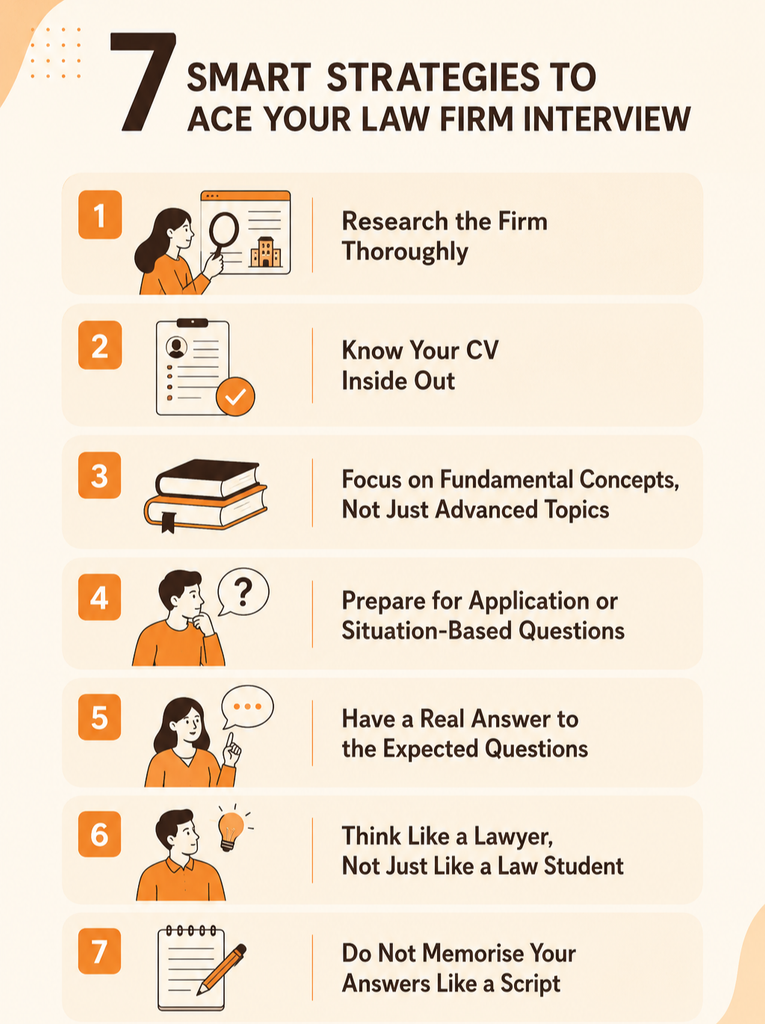
Image 1: 7 strategies to ace law-firm interviews
1. Research the Firm Thoroughly
As soon as you get to know about the discussion call, understand the firm’s practice area, recent transactions, major clients and industry focus. In today’s time, everything is just one google search away. One quick resource can be checking Legal 500.
For example, if you are interviewing for a corporate role, you should definitely know whether the team’s work is concentrated on M&A, private equity, general corporate advisory or a mixture of all. Further, check for recent deals or matters handled by the team you are interviewing with. This will also help you in answering the most anticipated question “Why do you want to join our team?”
2. Know your CV Inside Out
Consider your CV as the questionnaire that you have provided to the interviewer to secure the interview. The key words or phrases mentioned in the CV will help you to anticipate the recruiter’s questions. Anything mentioned on your CV can become a question.
If you have mentioned drafting Share Purchase Agreement, please be prepared to explain the meaning and specific clauses you reviewed or drafted. If you have mentioned working on due diligence, you should know what documents you examined, what issues you identified and how you reported your findings.
While preparing on your CV entries, make sure that you prepare answer to these 3 questions:
- What was the matter or assignment?
- What exactly did I do?
- What did I learn from it?
3. Focus on the fundamental concepts not just the advanced topics
Sometimes candidates prepare a lot of time focusing on the advanced topics or preparing answers to obscure legal questions while overlooking basic concepts. Law firms often test fundamentals because strong foundational knowledge is essential for practical legal work. If you are going for an interview for a general corporate role, these are the key topics that you should prepare:
- Types of companies under Companies Act 2013
- Representations and warranties
- Difference between indemnity and damages
- Conditions precedent
- Conditions subsequent
- Types of resolutions
- Force majeure
However, please do not stop at definitions. If you are asked “What are damages?”, your answer should not sound like a copy pasted textbook definition. You should explain what the provision does commercially and give a simple example.
Note that the interviewer is generally testing whether you understand the concept well enough to use it, not whether you can recite or memorise its definition. If you can explain a legal concept in simple language, you probably understand it.
4. Prepare for Application or Situation Based Questions
Law firm interviews are rarely limited to “What is Section 12?” But you will be given a practical situation like “You are reviewing a Facility Agreement and discover that the target company has an undisclosed litigation matter. What would you do now?” or “You are working with your seniors and you do not agree with their style of working. What will you do?”
For every internship, project, or achievement on your tailored resume, prepare a specific example using the STAR method: Situation, Task, Action, Result. Write these out in full once covering:
- Situation: the context, in one sentence. What was the matter, project, or assignment?
- Task: what you were specifically asked to do.
- Action: the concrete steps you took, in enough detail to show your own judgment and process, not just the outcome.
- Result: what happened, ideally with a measurable or observable outcome and what you personally learned.
Once you have undertaken this exercise, you will find it easier to answer experience based questions without feeling stuck.
5. Have a real answer to the expected questions
These questions are almost entirely predictable and yet many candidates answer them in the most generic way. You should have prepared a unique story that you can share with the recruiter. A few of the expected questions are:
- Tell us something about yourself?
- Why Law? Why this particular area of law?
- Why this firm? If both our firm and a competitor offer you a job, which one would you choose?
- What are the most likely reasons you may leave the firm?
- Are you comfortable with long hours or weekends?
These are the first set of questions that are asked in any discussion and this can help you set a positive tone. Have a few pointers ready for this set of questions that you want to convey to the recruiter in 90 seconds.
6. Think like a lawyer, not just like a law student
This is probably one of the biggest differences that will help you stand out from your peers. For example, a law student may look at a contract and ask “is this clause valid?” but a lawyer will also ask “what does this mean for a client?” So always analyse the question from a higher perspective.
Even as a law student, you can show that you can demonstrate this mindset. You should try to understand why a clause exists, what risk is it addressing and what it means for the transaction.
7. Do not memorise the answers like a script
You should definitely practice before an interview. However, like previously stated, never memorise the entire paragraph and then try to reproduce them word to word. Interviews are conversations. The interviewer will ask you follow up questions, interrupt you and change the direction and ask you to elaborate. So simply mugging up an answer will not help.
These are the 7 steps that will help you ace any interview. One more thing, please don’t try to sound like someone you are not. You do not need to use complicated legal jargon in every sentence you speak. You can keep your answers simple and basic. The goal is not to know how to answer every question perfectly but to answer every question confidently.
Want to walk into your interview already thinking like a corporate lawyer? Lawctopus Law School’s Corporate Law Career Accelerator covers the exact fundamentals interviewers test: Companies Act, M&A, contracts, and more with practical drafting exercises and a certificate to strengthen your CV.
Still unsure if it’s right for you? Call our course counsellor at +91 93596 84056. They’ll help you figure out the right fit before you commit a single rupee.
About the Author
Simran Sabharwal is a Gold Medallist in Business Laws from RGNUL, Punjab, and a former Associate at Khaitan & Co. She is currently a Learning and Editorial Manager (Corporate Vertical) at Lawctopus Law School, where she teaches corporate law and practical commercial drafting.