
The career that law students most often think of when they hear the word “research” is that of a Professor. The typical scenario involves obtaining an LLM, then going on to earn a PhD, and finally taking a job as a professor. That approach has nothing at all wrong with it, but it should be noted that research extends well beyond the academic sphere.
Legal research is required everywhere. Think tanks need researchers to examine laws and government policies. Judges and litigators need people who help them with legal research. NGOs employ researchers to look into matters like human rights, gender, the environment and access to justice. Law firms require lawyers who are able to carry out research into difficult and continually changing areas of law. Government departments have people who study legislation and policy as well. Research in areas such as technology, artificial intelligence, data protection and public policy is also on the rise.
That means if you enjoy research it does not follow that you must become a professor.
What is the actual work of a researcher?
This might well be the first question you need to ask yourself. A researcher doesn’t just spend his or her entire day sitting in a library and reading books. The appearance of the work will vary from one organisation to another.
You could be asked to look at a law or bill which has been proposed and to point out any issues it may have. You might need to examine numerous judgments in order to understand the way in which the courts have handled a specific issue. You might be engaged in preparing a policy report, carrying out interviews, analysing the responses to surveys or looking at government data.
You could also be asked to turn all that research into something that people can make use of, such as a research paper, a policy brief, a report, an article, a presentation or even specific recommendations for changing a law.
Essentially, research involves asking a good question, finding reliable information, interpreting it, analysing it and then conveying the results that have been found.
That does sound simple, but doing it is not that simple.
Where can a research career take you?
There are so many options available in this field than the average law student realizes.
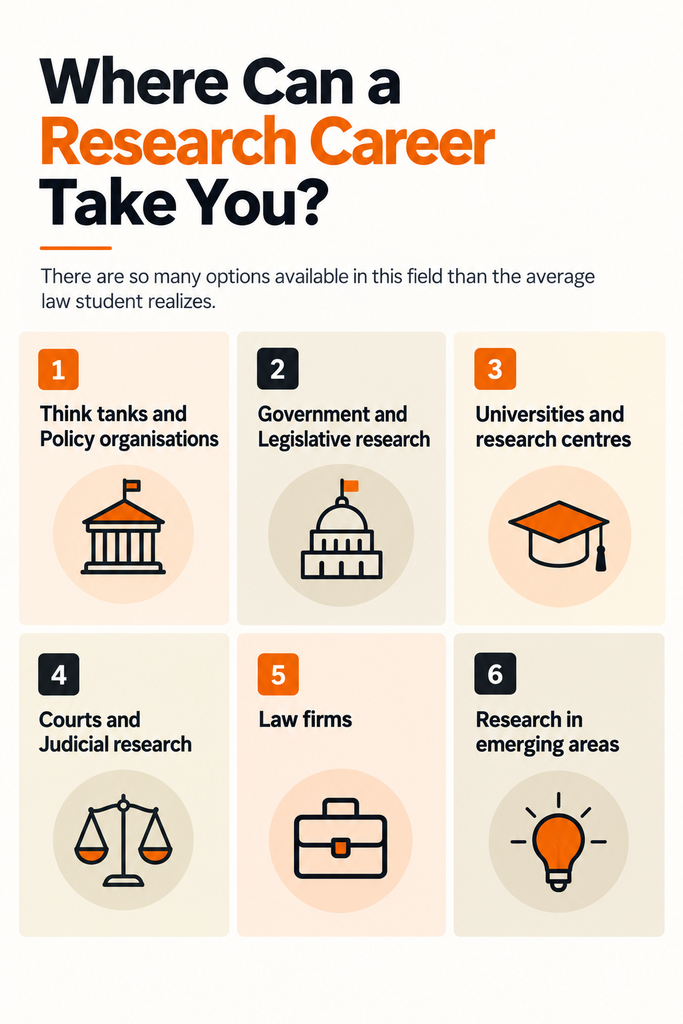
Image 1: Where Can a Research Career Take You?
1. Think tanks and Policy organisations
The researchers working here have to work on legislation, governance, constitutional law, social policy or other matters of public interest. If you are interested in law, public policy and governance, organisations such as Vidhi Centre for Legal Policy and PRS Legislative Research are worth knowing about.
2. Government and Legislative research
This would consist of examining Bills, government schemes, regulations, budgets and policies and assessing their possible impact. Organisations like the Centre for Social and Economic Progress (CSEP) conduct research on issues including growth, finance, development, energy, sustainability, foreign policy and security. It also hires across research and other functions
Some key organisations in this space include NITI Aayog, National Institute of Public Finance and Policy (NIPFP), Observer Research Foundation (ORF), and Centre for Policy Research (CPR).
3. Universities and research centres
Some examples include NLSIU, NALSAR, NLU Delhi, NLU Jodhpur, GNLU, NLU Odisha, NLU Assam, IITs, IIMs, and the Indian Institute of Science (IISc), all of which offer research projects, research assistantships, fellowships and opportunities to work with faculty. They also provide the opportunities to take part in academic research projects, publications and major research programmes. It is true that this may eventually result in a career in teaching and within academia.
4. Courts and Judicial research.
This kind of research consists of locating relevant cases, understanding the complicated legal questions and assisting with the preparation and analysis involved in judicial work.
5. Law firms
Law firms also place a huge reliance and focus on legal research. If a lawyer has to work on a complex legal question regarding a new regulation, he has to locate an old court judgment, or has to work out how the courts have interpreted a specific provision, thus, will need to carry out research.
6. Research in emerging areas
Opportunities are also available with organisations such as Centre for Law and Policy Research (CLPR), Human Rights Law Network (HRLN), Amnesty International, United Nations agencies, Internet Freedom Foundation (IFF), and legal-tech companies such as SpotDraft and Presolv360, , especially for those who are interested in fields such as human rights, public policy, technology and regulation.
There is also a lot of growing space for people who can combine legal research with another discipline.
Think AI and law, data protection, climate policy, competition law, digital regulation, public health, fintech or technology policy.
What is important is that the term “researcher” has quite different meanings in different workplaces.
But “I like research” is not enough
It is here that students often make the mistake. They claim to be interested in research, but if an interviewer asks them, “What research have you actually done?,” then they won’t be able to produce much as an answer.
If you really want to pursue this career, begin developing your skills right away.
Start by learning the proper way to carry out legal research. Make sure you know how to find legislation, judgments, regulations, reports and other primary sources; don’t rely completely on Google.
Second, improve your writing skills. Research is only of any use if you are able to explain what you have found in a clear way. A really good piece of research contained in a poorly written 8,000-word paper remains a problem.
Third, you need to understand the research methodology, this includes knowing the difference between doctrinal and empirical research and also having a basic knowledge of qualitative, quantitative and mixed-method research.
Fourth, learn how to communicate your research. Although researchers write papers, they also produce policy briefs, presentations, reports, articles and at times create content for a broader audience.
It is not necessary for you to be an expert in every field, but you ought to have a basic understanding and, more specifically, should know what you are doing when you talk about having research experience.
You can start before your LLM. You should, in fact.
You don’t have to have a PhD if you want to refer to yourself as a researcher. Choose a topic that you truly find interesting. Read the various writings that other people have produced on it. Do not just simply gather ten articles and then write a summary of them, look for areas of disagreement, unanswered questions, and gaps.
Begin by reading a case comment or a brief research article, take part in a research project, apply for research internships, help a professor, and if you get the chance, carry out an empirical project.
Try to develop a research portfolio over time. Your CV shows what work you, while your research portfolio demonstrates how well you actually can carry it out.
And yes, research can be frustrating
This issue is not discussed as needed. You could spend hours searching for a single judgment. It’s possible that after reading twenty papers you could find that someone has already answered your research question. It’s possible that when you gather data you will find that half of it turns out to be useless.
Curiosity is needed for research, but so is patience; you have to be at ease with the idea that you won’t know the answer right away.
However, if you take pleasure in asking questions, finding resources more thoroughly, looking for evidence and attempting to understand why something functions the way it does, a career in research can be very interesting.
It can take you to places that go well beyond the confines of a university classroom.
You might find a job in a think tank, in the courts, in a law firm, in a government organisation, in an NGO or in a technology-policy team. You could then become a policy researcher, a legislative researcher, an empirical researcher, a judicial researcher or a legal researcher.
You need not make up your mind today as to which one you want to become.
Start small! Learn how to ask better questions? How to discover better answers? How to explain those answers clearly?
Once you get started with the same, no matter where your legal career may ultimately lead you, those skills will still be useful.
Start small. Learn how to ask better questions. Learn how to find better answers. Learn how to evaluate what you find, build an argument around it, and explain it clearly.
And if you want to take that interest in research a step further, you can start learning these skills now, you don’t have to wait until an LL.M. or PhD.
The Legal Research and Writing course by Lawctopus Law School is designed to help you build the very skills that a career in research demands: understanding research design and methods, conducting effective legal research, analysing information, writing well, and referencing and footnoting correctly.
The course is practical, with live sessions, recorded lectures, research assignments and personalised feedback on your work.
So, if you have ever thought “I like research, but I don’t really know how to become good at it,” this is a good place to start. Learn to research better. Write better. Think better.
About the Author
Ms. Mansi Mankotia holds a B.A. LL.B. and LL.M. from HPNLU, Shimla. She secured AIR 906 in CLAT PG 2020 and is currently a Senior Learning Manager at Lawctopus Law School.