
Key clauses in a Non-Disclosure Agreement (NDA) determine what information is protected, how the receiving party may use it and what happens if confidentiality obligations are breached. When reviewing the key clauses in an NDA, lawyers should consider the commercial purpose of the arrangement as well as the legal risks. An NDA is one of the most commonly used legal documents in business transactions. Whether parties are considering a business relationship, negotiating an investment, sharing confidential information, hiring consultants or exploring an acquisition, an NDA helps protect the confidential information exchanged during these discussions.
While key clauses in an NDA are often treated as boilerplate documents, their terms can have significant legal and commercial implications. An overly broad confidentiality obligation, an unreasonable restriction on the use of information or an indefinite confidentiality period can create unnecessary risks for the parties.
Simply put, an NDA is a legally binding agreement between two or more parties under which they agree to protect confidential information shared with them and not disclose or misuse it without proper authorisation. It ensures that the person or organisation receiving confidential information does not share it with unauthorised persons or use it for purposes other than those agreed upon.
As counsel, these are five crucial clauses to review when examining an NDA.
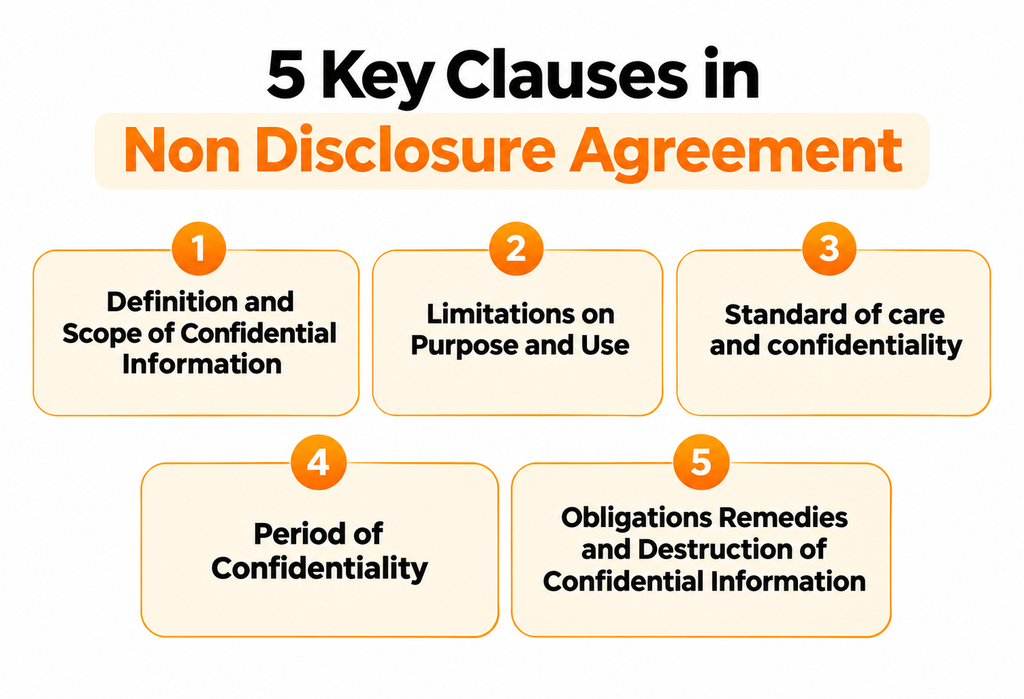
Image 1: 5 Key Clauses in a Non-Disclosure Agreement (NDA)
1. Definition and Scope of Confidential Information
The definition of confidential information is the heart of any NDA. It sets out what information is protected by the agreement and the obligations of the receiving party. This is one of the first key clauses in a Non-Disclosure Agreement (NDA) that counsel should examine, because every other confidentiality obligation depends on the scope of this definition.
A broad definition can include virtually any disclosure by one party, such as business plans, financial information, customer lists, technical data, trade secrets, discussions, correspondence and even the fact that the parties are negotiating.
While broad protection may be desirable, an overly broad definition can create practical difficulties for the receiving party. For example, if everything said at a meeting is classified as “confidential”, without any restriction based on the nature of the information or the circumstances in which it was shared, the receiving party may find it difficult to identify what information is subject to confidentiality obligations.
So, what should you look out for?
- Whether there is a definition of Confidential Information that clearly relates to the purpose of the NDA.
- Whether oral, electronic, visual and written disclosures are included.
- Whether oral disclosures must be marked as confidential at the time of disclosure or reduced to writing within a specified timeframe.
It is equally important to consider what is excluded from the definition of confidential information. A well-drafted definition should balance the disclosing party’s legitimate interest in protecting its information with the need to avoid imposing excessive obligations on the receiving party.
The World Intellectual Property Organization explains that trade secret protection depends, among other things, on the information remaining secret and the holder taking reasonable steps to protect it. Those steps can include confidentiality agreements and access controls. See the WIPO guidance on trade secrets and their protection.
For lawyers looking to build practical contract-drafting skills, Lawctopus Law School’s 1-Year Certificate Course on Advanced Contract Drafting & Freelancing covers the drafting and review of 60+ real-world agreements, including NDAs, through 75+ live sessions.
2. Limitations on Purpose and Use
An NDA should not merely restrict the disclosure of confidential information. It should also specify the purposes for which the information may be used. This is another of the key clauses in a Non-Disclosure Agreement (NDA) that should be tailored to the transaction rather than copied from a standard template.
This is particularly important in business transactions where sensitive information is exchanged in connection with due diligence, the evaluation of investment opportunities, the planning of business combinations and the negotiation of acquisitions.
For example, when a company shares its financial statements, business plans and operational information with a potential investor, the NDA should restrict the use of that information to evaluating the proposed investment. The investor should not be permitted to use it for an unrelated commercial purpose or to obtain an unfair competitive advantage.
So, what should you look for?
- Is the purpose for which the information can be used clearly defined?
- Can the recipient use the information only for that specific purpose?
- Are employees, professional advisers, consultants, affiliates and representatives permitted to access the information where necessary?
- Are such persons subject to corresponding confidentiality obligations?
A permitted-purpose clause that is too restrictive can also create problems. For instance, if the receiving party is prohibited from sharing information with its lawyers, accountants or technical advisers, effective due diligence may become almost impossible.
The clause should permit necessary disclosures on a need-to-know basis while ensuring that the receiving party remains responsible for unauthorised disclosures by persons to whom it provides access, to the extent agreed under the NDA.
Confidentiality obligations may also arise before parties sign a formal contract. Read our guide on Pre-Contractual Agreements: A Guide for Mastering the Step Before the Final Contract to understand how such obligations can be addressed during preliminary negotiations.
3. Standard of Care and Confidentiality
These provisions set out the actual duties of the receiving party to protect confidential information. Usually, the receiving party agrees to keep the information secret, limit access to it, avoid disclosing it to third parties and take reasonable steps to maintain its protection.
However, careful attention must be paid to the standard of care required under the NDA.
Some agreements require the recipient to treat confidential information in the same manner as it treats its own confidential information. Others require a particular standard, such as reasonable care or compliance with specified information security practices.
So, what should you look for?
- Whether the standard of care is clearly articulated.
- Whether the recipient is required to implement reasonable technical and organisational safeguards.
- Whether there are appropriate limitations on disclosure to employees, members of group companies and professional advisers.
- Whether the agreement requires the recipient to notify the disclosing party promptly in the event of any unauthorised disclosure, loss or breach.
A practical problem may arise where the NDA imposes an absolute obligation to prevent any unauthorised access to or disclosure of confidential information. This could expose the receiving party to disproportionate liability, regardless of the precautions it has taken.
The clause should establish a commercially reasonable standard of protection and address liability for breaches by employees, agents and other authorised recipients.
4. Period of Confidentiality Obligations
The term of an NDA and the survival of confidentiality obligations are two different concepts. The distinction is often overlooked when reviewing a contract.
The term refers to the duration of the agreement, while survival refers to the period for which confidentiality obligations continue after the agreement is terminated.
For instance, an NDA may have a term of two years, but the confidentiality obligations may continue for three years after the NDA terminates.
So, what should you look out for?
- Whether there is a defined contractual time period in the NDA.
- Whether the survival period of confidentiality obligations is specified.
- Whether trade secrets and other highly sensitive information are treated differently and protected for as long as they retain their confidential character, to the extent permitted by law.
An indefinite confidentiality obligation for all types of information may be commercially unreasonable, particularly where the information is likely to lose its confidential character over time, either because it enters the public domain or ceases to be commercially sensitive.
In contrast, a short confidentiality period may provide inadequate protection for sensitive business information, technical know-how or trade secrets.
The drafting should distinguish between ordinary business information and information that requires a longer period of protection. This helps ensure that the protection granted is proportionate to the nature of the information and the corresponding confidentiality obligations.
5. Remedies and Destruction of Confidential Information
Upon termination of the commercial relationship, the receiving party may be required to return all confidential information in its possession or control upon the disclosing party’s request.
This is particularly relevant where the parties have exchanged substantial amounts of electronic data, physical documentation, financial information or due diligence records.
So, what should you look out for?
- Whether the return or destruction obligation applies upon termination, expiry or a written request by the disclosing party.
- Whether the obligation covers copies, extracts, notes and summaries, as well as reproductions and derivative works.
- Whether the recipient must certify the destruction of confidential information in writing.
- Whether there are exceptions for records retained under applicable laws, regulations or bona fide internal retention policies.
The remedies clause is equally important. It may address the disclosing party’s right to claim damages or other remedies for a breach, as well as its right to seek injunctive relief in cases involving the misappropriation of trade secrets. These remedies form an important part of the key clauses in a Non-Disclosure Agreement (NDA), and should be considered alongside the applicable law and the likely loss arising from a breach.
Particular care should be taken where the agreement provides for specific or automatic sums to be paid upon any breach, regardless of the nature or amount of the loss. In such cases, counsel should examine whether the provisions are enforceable and commercially reasonable under the applicable law.
For agreements governed by Indian law, the remedies analysis should also be read with the Indian Contract Act, 1872. Sections 73 and 74 address compensation for loss caused by breach of contract and compensation where a sum is stipulated for breach. Refer to the official text of the Indian Contract Act, 1872 on India Code and check the applicable provisions in the context of the particular agreement.
The receiving party should also consider whether the agreement imposes unlimited liability for breaches of confidentiality.
When reviewing remedies for a breach of confidentiality, lawyers should also consider how the agreement allocates financial risk between the parties. Read our article on How to Draft the Perfect ‘Limitations of Liability’ Clause: Tips and Tricks
Key Clauses in an NDA: Conclusion
Although an NDA may appear to be a standard document, its terms can have serious implications for both the disclosing party and the receiving party.
The scope of confidential information, permitted use, confidentiality requirements, survival period and return or destruction obligations must be reviewed carefully to ensure that the agreement is balanced and works as intended. Lawyers should not focus solely on maximising protection for one party. The objective should be to draft clear, commercially workable, proportionate and enforceable confidentiality obligations.
A good NDA is one that protects confidential information without unnecessarily restricting the legitimate business activities of the parties.
About the Author
Simran Sabharwal is a Gold Medallist in Business Laws from RGNUL, Punjab, and a former Associate at Khaitan & Co. She is currently a Learning and Editorial Manager (Corporate Vertical) at Lawctopus Law School, where she teaches corporate law and practical commercial drafting.