
Introduction
Intellectual property is considered one of the most interesting and unorthodox domains in the field of law. And why wouldn’t it be? It is the propertization of intangible creations of the human mind!
Something we cannot touch, unlike the tangible things like a house, a supercar, or a plot of land. The only limitation to such propertization is literally your imagination (although within the rules of specific IPs to be precise).
We constantly interact with the subject matter of Intellectual Property Law in our daily lives. The MacBook this is being typed on contains numerous patents. The logo of Apple, of course, is a Trademark. The Darjeeling Tea which you might drink is a Geographical Indication, and this module you are reading is copyrighted by us.
Book publishers and movie production houses own a copyright over each of their literary works and feature films, respectively, to prevent their unauthorized usage. Needless to say, copyright is an integral component of the Intellectual Property Law. So, let’s explore the world of law associated with it!
What is Copyright?
Copyright is a right which recognises ownership over creative works. In simple terms, copyright is a right given to the creators of any form of expression such as music, movies, books, caricatures, etc.
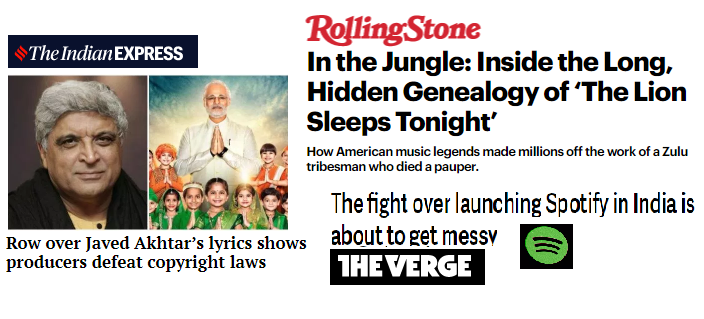
(Image 1: These recent newspaper articles show the significance of copyright)1
Why did the need for copyrights arise in the first place? Copying and distributing creative works for profit is more of a modern phenomenon which can be traced back to the invention of the printing press. Copyright allows creators to choose who is allowed to reproduce their work for a limited time.
Copyright legislations are a balancing act between the rights of the creators and the rights of the consumers. They promote creativity, innovation and talent, and forbid piracy.
Maintaining an equilibrium in respect of these rights will not only prevent the owner of the copyright from losing money due to the unauthorised consumption of his creative material, but will also protect the financial interests of consumers.
Copyright laws will secure the interests of those individuals who are paying for the consumption of creative works by prohibiting the others from resorting to piracy to access the same. Thus, a mutually beneficial environment will be created.
To strike the right balance between the rights of copyright owners and the interests of the society as a whole, the copyright law typically grants an exclusive right to the owner for a ‘limited time’ (often lifetime and a couple of decades after the death of the owner, six decades in case of India), after which, the hitherto copyrighted work comes into the public domain and becomes accessible to all. This way, copyright law ensures a balance of rights.
Think: how does society get benefitted if the copyrighted works are available in the public domain?
History of Copyright
The concept of Copyright or the “right to copy” can be traced back to the sixteenth century England when Johannes Gutenberg invented the printing press.
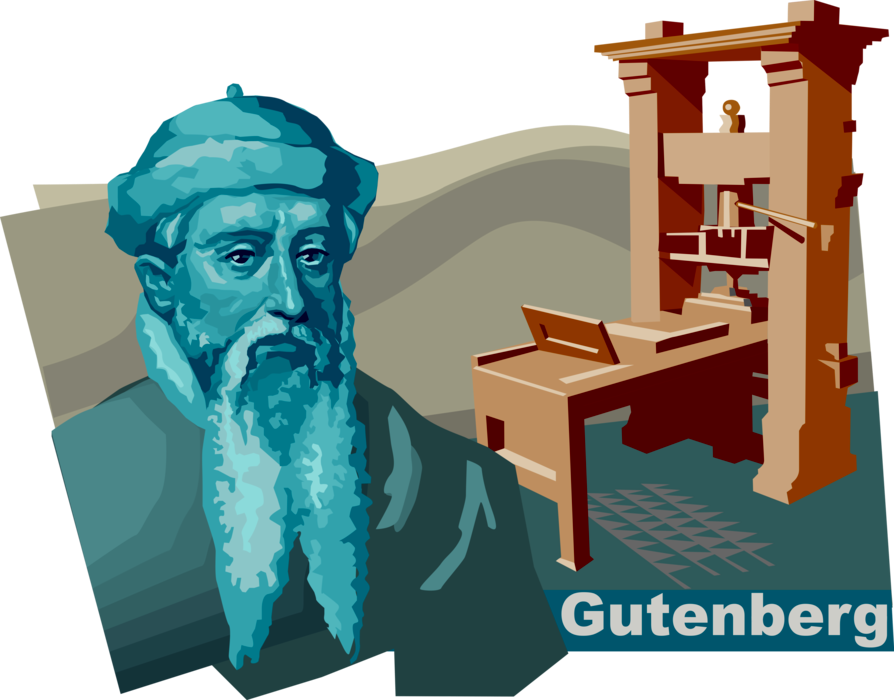
(Image 2: Vector Illustration of Johan Gutenberg, Mechanical Movable Type Inventor of Print. He started Printing Revolution)2
As people started creating, printing and selling their work, they also realised the importance of preventing their work from being exploited for profit by others.
Flashing forward, during the British rule, the Copyright Law was used as a censorship tool where the Crown had a monopoly over the publication of creative material. This allowed them to control the publication of seditious or heretical work.
Consequently, during this period, only a select group of printers, bookbinders, and booksellers were given the monopoly over printing and selling books in London.
The select group of printers were given a ‘royal charter’ which secured their privileges such as the right to be a corporate body with perpetual succession, the power to take legal action and power to self regulate. Till 1709, the right to publish books rested only with these Crown chartered guilds of printers and booksellers.3
This changed when the British Parliament enacted the Statute of Anne in 1710, often viewed as the first copyright statute in the world. The purpose of the statute was “for the Encouragement of Learning”, by granting an exclusive right of publication for a limited period to the authors and hence preventing the unauthorized copying of their works.4
Inspired by the Statute of Anne, many countries enacted similar laws. Countries like Germany and France furthered the scope of “right to copy” and went ahead to recognise the author’s “moral rights” over their works. Moral rights allow authors and creators to take certain actions to preserve and protect their link with their work.5
Several countries worldwide, including India, do not allow the transfer of these rights even if the author or creator decides to part with his economic rights over a work. The moral rights of the author went beyond the authors’ economic interest over their works and included the right of attribution, right of integrity, right of disclosure and right of withdrawal.6
References
- See: https://indianexpress.com/article/opinion/columns/javed-akhtar-lyrics-pm-narendra-modi-film-vivek-oberoi-5653582/ , https://www.rollingstone.com/music/music-features/in-the-jungle-inside-the-long-hidden-genealogy-of-the-lion-sleeps-tonight-108274/ and https://www.theverge.com/2019/2/25/18240443/spotify-india-warner-music-group-copyright-law ↩︎
- Credits: https://www.wannapik.com/vectors/90582 ↩︎
- The Author’s Due : Printing and the Prehistory of Copyright, University of Chicago Press, 2002, Bettig,
Ronald V. (1996). Copyrighting Culture: The Political Economy of Intellectual Property. ↩︎ - Abrams, Howard B. (1985). “The Historical Foundation of American Copyright Law: Exploding the Myth of Common Law Copyright“, Deazley, Ronan (2004). On the Origin of the Right to Copy. Hart Publishing
↩︎ - https://www.wipo.int/edocs/pubdocs/en/wipo_pub_909_2016.pdf, Understanding Copyright and Related Rights, WIPO, 2016
↩︎ - See: https://www.jstor.org/stable/pdf/20454566.pdf?refreqid=excelsior%3A9b6c286b75a1ff27847d00527a70afe0
↩︎